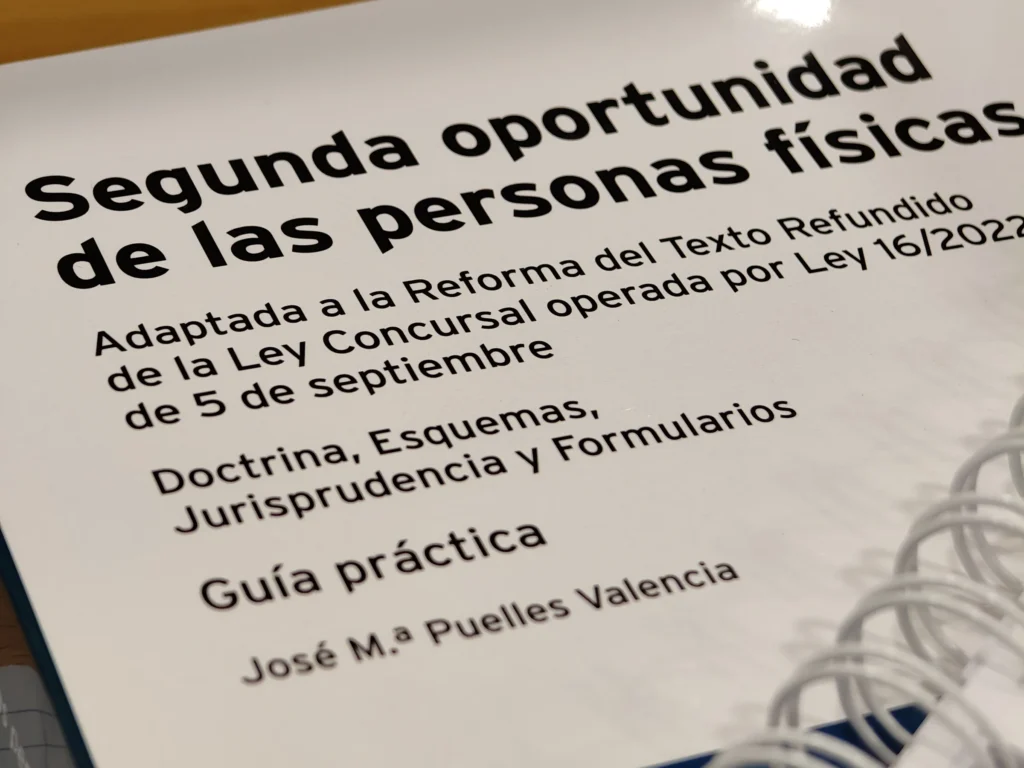
The second chance law is neither an automatic formality nor a wholesale write-off of debts: it requires strict proof of good faith, an analysis of each debt under Books One and Two of the Insolvency Act, and a choice between selling off the debtor’s assets or committing to a payment plan in order to keep the family home.
Who we help
- Self-employed people and professionals carrying debts from a failed business or a fall in income who need to restructure their situation or start again.
- Company directors who gave personal guarantees for credit facilities, discount lines or company loans and are now liable with their own assets.
- Private individuals caught in a spiral of consumer loans, revolving credit cards or guarantees given for relatives that they cannot meet.
- Debtors with assets or a family home who want to protect them through a court-approved payment plan instead of selling everything.
When it makes sense
- Monthly income is not enough to cover basic living costs and the regular loan instalments.
- There are seizures in place over wages, bank accounts, vehicles or property, or court claims under way.
- A self-employed person has closed their business, or is still trading, but has overdue debts with suppliers, banks, the Tax Agency or the Social Security Treasury.
- Personal guarantees were given for a company that has become insolvent.
- The aim is to keep the family home by restructuring part of the debt in a three- or five-year payment plan.
What the engagement can include
- Preliminary assessment of viability and good faith review of the debtor’s history, the origin of the debts, the absence of convictions for economic offences and strict compliance with the personal requirements for discharge (Article 487 of the Insolvency Act).
- Classification of the debtor’s profile identifying the applicable procedure, distinguishing between the insolvency of an individual without a business and the special procedure for micro-enterprises (Book Three of the Insolvency Act) for self-employed people.
- Discharge strategy designing the most favourable route, either liquidation of the debtor’s assets (including no-asset insolvency proceedings) or approval of a payment plan (Article 495 onwards).
- Inventory of assets and liabilities gathering the documents, classifying ordinary, subordinated and specially privileged claims, and separating dischargeable from non-dischargeable debts.
- Full legal representation drafting and filing the application with the competent court, dealing with the insolvency practitioner and seeing the final discharge order through.
What the scope depends on
- The debtor’s status: whether they act as a private consumer or as a sole trader or self-employed person.
- The debtor’s assets: whether there are assets that can be sold, such as property or vehicles.
- Whether assets are to be kept: a payment plan to keep the family home requires a detailed financial analysis of future cash flows.
- The structure of the debt: mortgages, secured claims or public-law debts.
- The documentary work needed to prove the credit history and identify the creditors affected.
After studying the initial documents and checking that the legal requirements are met, we send you a fixed quote tailored to your case.
How we work
- Initial contact and eligibility check You tell us about your financial and family situation so that we can check that the legal good-faith requirements are met.
- Document review and strategy We analyse contracts, debts, income and assets to decide on the right route: no-asset insolvency, liquidation or a payment plan.
- Quote and engagement letter We send you a detailed written quote and the list of documents needed.
- Filing and court follow-up We draft and file the application with the commercial court and support you at every stage until the discharge order is obtained.
Who handles your matter

Your case is led directly by Sara González Domínguez, a lawyer registered with the Málaga Bar Association (no. 8502), court-appointed insolvency practitioner and insolvency expert, always backed by the rest of the firm’s team. Her work as an insolvency practitioner allows her to anticipate rigorously how the courts assess these cases and to make the discharge application robust against possible objections.
If your debts come from a company that is still trading or needs to be wound up, we coordinate this process with our services for insolvency proceedings and debt restructuring for companies or company liquidation and closure.
Illustrative example: a self-employed haulier in the Guadalhorce Valley stops trading with €120,000 in working-capital loans backed by his personal guarantee and debts with suppliers. Once it is confirmed that there are no assets to sell and that he has acted in good faith, no-asset insolvency proceedings are filed and he obtains the final discharge of his unsatisfied liabilities, cancelling all of his dischargeable debts.
Frequently asked questions
What is the difference between the insolvency of a private individual and that of a self-employed person?
Both aim to obtain the discharge of unsatisfied liabilities (EPI), but the procedure differs. A private individual without a business goes through general insolvency proceedings (or no-asset proceedings). A self-employed person who meets the micro-enterprise criteria (fewer than ten employees and turnover below €700,000 or liabilities below €350,000, under Article 685 of the Insolvency Act) follows the special procedure in Book Three of the Act.
Does the second chance law cancel all debts?
Not all of them. Article 489 of the Insolvency Act sets out the exceptions. Excluded from discharge are debts arising from non-contractual civil liability, death or personal injury, maintenance debts, criminal fines and very serious administrative penalties, wages for the last sixty days within certain limits, and secured claims (such as mortgages) up to the value of the security.
What happens to debts with the Tax Agency and the Social Security?
Public debt has a limited discharge regime under Article 489.1.5.º of the Insolvency Act: up to €10,000 owed to the Tax Agency and up to €10,000 owed to the Social Security Treasury can be cancelled (the first €5,000 in full and 50% of the excess up to that €10,000 limit, for each body). Any amount above that threshold is not cancelled automatically and has to be dealt with in a payment plan.
Will I lose my home if I use the second chance law?
Not necessarily. A debtor who has a family home and a regular income can seek discharge through a payment plan (Article 495 onwards), avoiding the sale of their assets. The plan generally lasts three years (or five years if the home is not sold), and the home can be kept as long as the ordinary mortgage payments are kept up to date.
What does the law require for a debtor to be considered in “good faith”?
Article 487 of the Insolvency Act provides that discharge cannot be obtained by anyone who, in the previous ten years, has been convicted by final judgment of offences against property or the economic order, forgery, offences against the Treasury, the Social Security or workers’ rights; anyone penalised for very serious tax, social security or employment infringements; anyone whose previous insolvency was declared culpable; or anyone who has run up debts recklessly or fraudulently.
What happens if the debtor has no assets and no money?
The no-asset insolvency regime in Article 37 bis of the Insolvency Act applies. When the court finds that the debtor has no assets that can be seized, or that the cost of selling them would exceed their value, it declares the insolvency and gives creditors holding at least 5% of the debt fifteen days to ask for an insolvency practitioner to be appointed. If no creditor does so, the proceedings are closed and the debtor can apply directly for discharge.
What happens to guarantors if the debt is discharged?
The discharge benefits only the insolvent debtor. Under Article 492 of the Insolvency Act, creditors keep all their rights against guarantors, co-obligors or jointly liable co-debtors, who cannot rely on the discharge granted to the main debtor.
How long does the procedure take?
It depends on the workload of the commercial court and how complex the case is (liquidation of assets or a payment plan). No-asset insolvency proceedings in the judicial districts of the province of Malaga are usually resolved in roughly four to nine months, until the discharge order becomes final.